

Key Takeaways
- In Asian cultures, dating is rarely a two-person affair - her parents, siblings, and even extended relatives influence the relationship from day one.
- South Asian families (India, Pakistan, Bangladesh) prioritize parental approval and often practice joint-family living, where marrying their daughter means joining an entire household.
- East Asian families (China, Japan, Korea) follow Confucian filial piety - respect for elders is non-negotiable, and your willingness to honor this determines how her family perceives you.
- Southeast Asian families (Philippines, Thailand, Vietnam) blend warmth and community with religious values, making generosity and emotional openness key trust signals.
- Simple gestures - bringing gifts when visiting, addressing her parents correctly, learning about family holidays - build trust faster than grand romantic gestures.
The Central Role of Family in Asian Cultures
Family is not just important in Asian cultures - it is the foundation upon which identity, social standing, and personal happiness are built. When you pursue asian women dating, you are not simply courting an individual. You are entering a family system that has operated on principles of mutual obligation, respect, and collective well-being for thousands of years. Understanding this reality before your first message is the difference between a meaningful connection and a frustrating cultural collision.
In Western societies, particularly the United States, individualism dominates. Adults move out at 18, make independent relationship choices, and rarely consult parents before committing to a partner. A 2025 Pew Research Center study found that only 17% of American adults consider parental approval "very important" when choosing a spouse. In Asia, that number inverts: across 14 Asian countries surveyed by the World Values Survey (2024), an average of 78% of respondents rated family approval as essential to a successful marriage.
What does this mean in practice? It means the woman you are chatting with is likely discussing you with her mother, seeking her father's opinion, and possibly consulting an older sibling or aunt. This is not a red flag - it is a sign of healthy family dynamics and a woman who values the collective wisdom of people she trusts. If that sounds intimidating, consider this: families who vet partners also raise women who are loyal, committed, and deeply invested in making relationships work.
"In the West, you date a person. In Asia, you date a family. If you understand this, you understand 80% of what makes cross-cultural relationships succeed." - Dr. Grace Kim, Cross-Cultural Relationship Therapist, UCLA (2025)
Family Values by Region - South, East & Southeast Asia Compared
Asia spans 48 countries across six geographic subregions, each shaped by distinct religions, languages, and historical traditions. Treating "Asian family values" as a monolith is the fastest way to misunderstand the woman you are dating. Here's a breakdown of the three major regions and what their family structures mean for your relationship.
South Asia: Joint Families, Parental Approval, and Deep Roots
In India, Pakistan, Bangladesh, Sri Lanka, and Nepal, the joint-family system remains the norm - even among urban, educated populations. According to India's National Family Health Survey (2024), 52% of married couples in India live with or near the husband's parents. For Indian women dating Western men, this means parental approval is not a preference - it is a prerequisite for most serious relationships.
South Asian families often follow a hierarchical decision-making structure where the eldest male (father or grandfather) holds significant influence. However, mothers are typically the emotional gatekeepers - win her mother's heart, and the path forward becomes dramatically smoother. Religious observance (Hinduism, Islam, Sikhism, Buddhism) deeply shapes family expectations around diet, holidays, and daily rituals.
- Marriage expectations: Clearly stated and discussed early - ambiguity is uncomfortable
- Family involvement: High - expect to meet parents within the first few months of serious dating
- Financial expectations: Stability and career success signal responsibility, not materialism
- Religious alignment: Respect for her faith tradition is essential, even if you do not share it
East Asia: Confucian Filial Piety and Modern Tensions
China, Japan, South Korea, and Taiwan share a Confucian cultural heritage that places filial piety - respect and care for one's parents - at the center of family life. The concept of xiào (孝) in Chinese, kō (孝) in Japanese, and hyo (효) in Korean all describe the same foundational value: children owe their parents respect, obedience, and support throughout life.
When dating Chinese women or Japanese women, understand that your partner may feel a deep obligation to consider her parents' opinion - even if she is financially independent and living alone. In South Korea, a 2025 survey by the Korean Institute for Health and Social Affairs found that 64% of unmarried women aged 25-39 said they would not marry someone their parents disapproved of, despite growing individualism in urban areas.
The modern tension in East Asia is real: younger women balance traditional expectations with career ambitions and personal independence. Korean women, for example, may pursue advanced degrees and high-powered careers while still honoring family holidays, calling their parents daily, and expecting their partner to do the same. The key is recognizing that modernity and tradition are not opposites - they coexist.
Southeast Asia: Community Warmth and Religious Diversity
The Philippines, Thailand, Vietnam, Indonesia, Cambodia, and Malaysia represent a region where family warmth is expressed openly, communally, and with deep religious undertones. Filipino families gather every Sunday for extended meals. Thai families honor their elders with the daily wai greeting. Vietnamese families celebrate Tết together for an entire week, and missing it is unthinkable.
Southeast Asian families tend to be larger, more extended, and more involved in daily decision-making than their East Asian counterparts. According to a 2024 UNICEF report, the average household size in the Philippines is 4.4 people, compared to 2.3 in Japan. This means your partner's family is not just her parents - it includes aunts, uncles, cousins, and godparents (particularly in the Catholic Philippines, where ninong and ninang hold quasi-parental roles).
| Region | Family Structure | Dating Implication | Key Tradition |
|---|---|---|---|
| South Asia | Joint/extended family; patriarch-led | Parental approval required early; marriage timeline discussed openly | Arranged introductions; family elders consulted on all major decisions |
| East Asia | Nuclear with strong parental influence | Actions speak louder than words; consistency builds trust slowly | Confucian filial piety (xiào/kō/hyo); eldercare obligations |
| Southeast Asia | Extended family; community-oriented | Warmth and generosity win approval; meet family early and often | Religious holidays (Tết, Eid, Songkran); communal meals as bonding |
Connect with Family-Oriented Asian Women
Verified women who value tradition, loyalty, and meaningful relationships

Anika, 27
New Delhi, India
Family-oriented teacher who cherishes traditions and Sunday dinners.
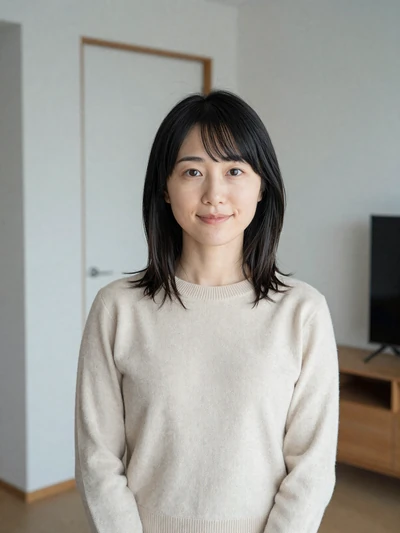
Yumi, 30
Tokyo, Japan
Graphic designer who visits her parents every weekend without fail.
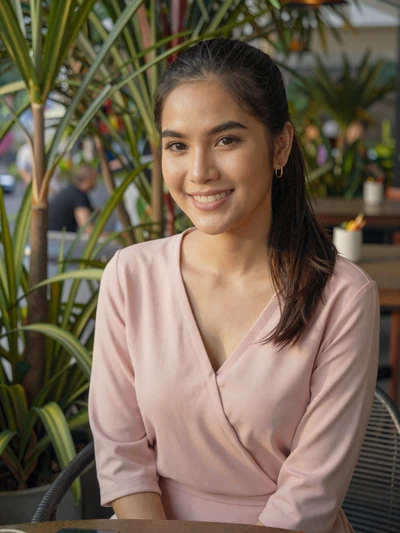
Chariya, 26
Bangkok, Thailand
Loves cooking family recipes passed down three generations.

Ji-Yeon, 28
Busan, South Korea
Marketing analyst who celebrates every family milestone together.

Maria Fe, 29
Cebu City, Philippines
Nurse who sends part of her salary home to support her parents.

Xiao Wen, 31
Shanghai, China
Finance professional who values both career success and family harmony.

Hanh, 25
Hanoi, Vietnam
Literature student who treasures Tết celebrations with extended family.

Deepa, 27
Colombo, Sri Lanka
Software developer who hosts family dinners every Friday evening.
How to Show Respect for Her Family - Practical Advice
Knowing about Asian family values is step one. Demonstrating respect for them in tangible, everyday ways is what separates a man she introduces to her parents from one she stops texting after a week. Here are specific, actionable steps that work across all Asian cultures.
Gift-Giving: Small Gestures, Big Impact
When visiting an Asian family for the first time - whether in person or virtually - bringing a thoughtful gift signals respect and good intentions. You do not need to spend extravagantly. A box of premium chocolates, quality fruit, or a specialty item from your hometown shows thoughtfulness. In Chinese culture, avoid wrapping gifts in white paper (associated with funerals); use red or gold instead. In Indian households, sweets (mithai) are universally welcomed. In Thai families, flowers or fruit baskets work perfectly.
Addressing Elders Correctly
Most Asian languages have specific honorific terms for addressing elders, and using them - even imperfectly - earns enormous respect. Call her mother Auntie (safe across Southeast Asia), Tita (Filipino), or Okaasan (Japanese). Ask your partner beforehand what her parents prefer. One Western man on our platform recalled: "I learned to say sawadee khrap, khun mae (hello, mother) in Thai. Her mom laughed, then hugged me. That was the moment I was accepted."
Learn Her Family's Important Dates
- Lunar New Year (China, Vietnam, Korea) - the most significant family reunion of the year
- Diwali (India, Nepal, Sri Lanka) - celebration of light, family, and new beginnings
- Songkran (Thailand, Laos, Cambodia) - water festival honoring elders and family bonds
- Chuseok (Korea) - harvest festival where families gather to honor ancestors
- Obon (Japan) - festival of remembrance for ancestors, deeply family-centered
- Eid al-Fitr (Indonesia, Malaysia, Bangladesh, Pakistan) - post-Ramadan family feast
Remembering these dates and asking about her family's plans shows cultural intelligence that few Western men demonstrate. According to a 2025 EliteSingles survey, 83% of Asian women on international dating platforms said a partner's awareness of cultural holidays was a "strong indicator of serious intentions."
Golden Rule
Never criticize her family's traditions, even if they seem unfamiliar. Curiosity is attractive. Judgment is a dealbreaker. Ask "Can you tell me more about why this tradition matters to your family?" instead of "That seems unusual."
Show Financial Responsibility - Not Wealth
Asian families are not looking for a wealthy foreigner - they are looking for a responsible, stable man who can provide security. Being transparent about your career, savings habits, and future plans communicates maturity. In South Asian cultures, a man's job stability carries more weight than his salary. In East Asian cultures, homeownership signals long-term planning. In Southeast Asian cultures, a man who sends support to his partner's family is demonstrating utang na loob (debt of gratitude) - the Filipino value of reciprocal generosity that cements family bonds.
The Bottom Line: Family Is Your Greatest Ally
Asian family values are not obstacles to your relationship - they are the architecture that supports it. The women on our platform who come from strong family backgrounds are the same women who build loyal, loving, lasting marriages. When you embrace her family's cultural expectations with genuine curiosity and respect, you gain more than a partner - you gain an entire network of people invested in your happiness together. Start your journey with asian women dating today, and approach every conversation knowing that family is not the barrier to love in Asia - it is the bridge.